



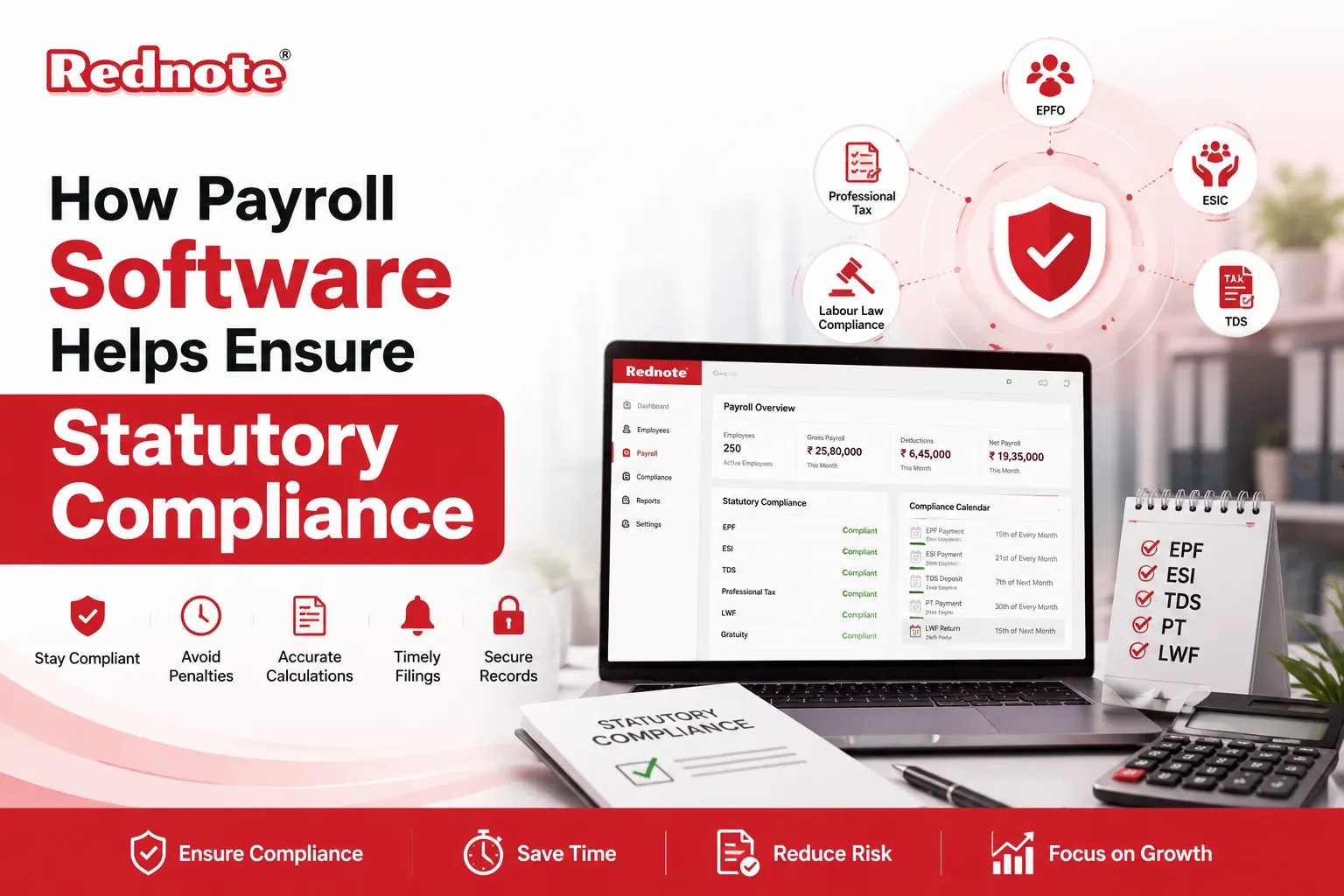
How Payroll Software Helps Ensure Statutory Compliance
Managing employee salaries involves much more than calculating monthly wages. Businesses also need to stay compliant with statutory requirements such as Provident Fund (PF), Employee State Insurance (ESI), Professional Tax (PT), Tax Deducted at Source (TDS), and labour laws. Missing a filing deadline or making a calculation mistake can lead to penalties and extra administrative work.
For businesses in Chennai, keeping up with changing payroll regulations gets harder as the company grows. A reliable payroll Software takes much of that work off your hands by automating calculations, maintaining accurate records, and generating compliance-ready reports. It helps businesses stay on top of statutory obligations while reducing manual effort.
Why statutory compliance matters
Statutory compliance means following government regulations related to employee salaries, taxation, and workplace benefits. Businesses need to calculate deductions correctly, submit returns on time, and maintain payroll records that are ready for audits.
Failure to comply can result in:
- Financial penalties
- Legal issues
- Payroll disputes
- Delayed employee payments
- Increased administrative workload
Using Payroll Software for Statutory Compliance helps businesses reduce manual work while improving payroll accuracy and meeting regulatory requirements.
How payroll software simplifies compliance
Modern payroll systems automate routine payroll tasks and reduce the chances of human error throughout the payroll process.
Automated salary calculations
Payroll software automatically calculates:
- Basic salary
- Allowances
- Overtime
- Bonuses
- Tax deductions
- Employer contributions
This helps prevent calculation errors and ensures employees receive accurate salaries every pay cycle.
Built-in compliance updates
Labour laws and tax regulations change regularly. A good payroll system keeps statutory rules updated automatically, so businesses can maintain Statutory Compliance in Payroll without manually changing payroll settings every time regulations are revised.
Accurate record keeping
Payroll records are stored securely and can be accessed whenever they're needed for:
- Internal audits
- Government inspections
- Financial reporting
- Employee queries
Well-organized payroll records also make it easier for HR and finance teams to work together and maintain transparency.
Benefits for businesses in Chennai
Businesses in Chennai often manage employees across different departments, branches, or office locations. Payroll software brings payroll activities into one place, making day-to-day management much easier.
Key advantages include:
- Faster monthly payroll processing
- Reduced compliance risks
- Improved reporting accuracy
- Secure employee data management
- Easier audit preparation
- Better coordination between HR and finance
A reliable Payroll Compliance Software helps organizations spend less time on repetitive payroll administration and more time focusing on business growth.
Choosing the right payroll solution
Every payroll application comes with a different set of features. Before selecting a solution, businesses should check whether it supports the following:
| Feature | Business Benefit |
|---|---|
| Automatic Statutory Calculations | Fewer Compliance Errors |
| Tax and Deduction Updates | Current Regulatory Compliance |
| Employee Self-Service | Reduced HR Workload |
| Payroll Reports | Easier Audits |
| Cloud Accessibility | Manage Payroll from Anywhere |
| Data Security | Protect Sensitive Employee Information |
Many growing businesses compare several options before investing in the Best Payroll Software that fits their operational requirements.
Common payroll compliance mistakes
Organizations that still depend on manual spreadsheets regularly run into problems such as:
- Incorrect tax calculations
- Missed filing deadlines
- Duplicate employee records
- Inaccurate overtime calculations
- Poor payroll documentation
Using Automated Payroll Software helps reduce these issues and keeps payroll processing consistent from one pay cycle to the next.
Conclusion
Payroll compliance is an ongoing responsibility that affects employee satisfaction, financial accuracy, and legal compliance. Automating payroll makes it easier to reduce manual errors, keep pace with changing regulations, and maintain accurate payroll records.
For businesses in Chennai, investing in a modern payroll solution makes compliance easier to manage and payroll operations more efficient. Software with dependable automation and statutory compliance capabilities saves time, reduces administrative effort, and supports long-term business growth.
Frequently Asked Questions