



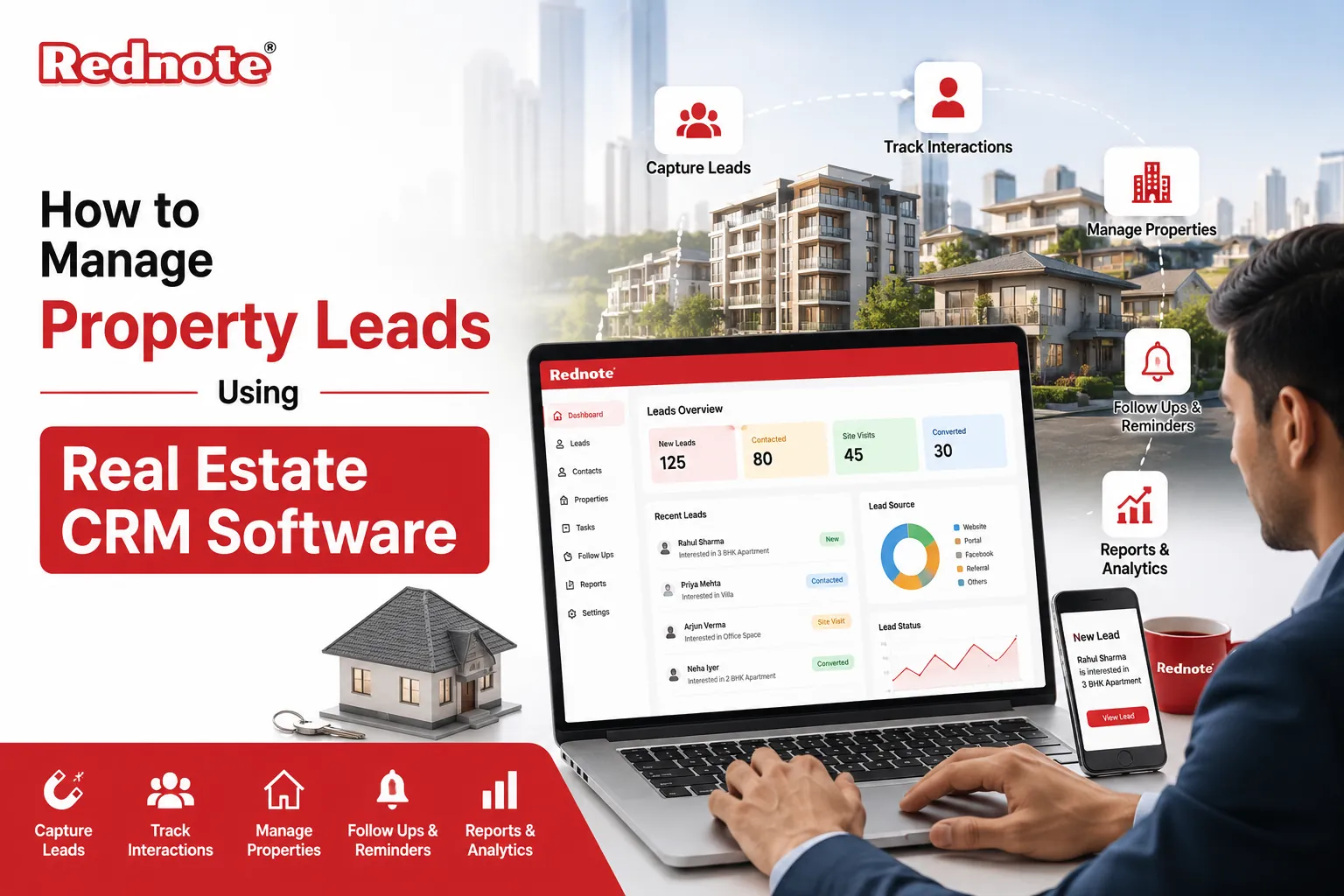
How to Manage Property Leads Using Real Estate CRM Software
Managing property inquiries can quickly become overwhelming when leads come in through your website, social media, referrals, and property portals. Miss a follow-up or rely on scattered spreadsheets, and it's easy to lose promising opportunities. That's where Real Estate CRM Software helps keep everything under control.
Whether you're an independent agent, broker, or developer in Chennai, a CRM helps you organize leads, automate follow-ups, and build stronger customer relationships. It keeps your sales process organized and makes daily lead management much easier.
Why lead management matters in real estate
Every enquiry has the potential to become a sale, even if the customer isn't ready to make a decision today. A structured system helps you:
- Store customer information securely
- Track every interaction
- Schedule reminders for follow-ups
- Identify high-priority prospects
- Measure sales performance
Your team doesn't have to dig through emails or spreadsheets to figure out what comes next. Every lead has a clear status, and the next action is easy to see.
Organize leads with Real Estate CRM
A centralized CRM keeps every customer record in one place. You can organize leads based on:
| Lead Type | Example Action |
|---|---|
| New Inquiry | Initial Phone Call |
| Interested Buyer | Schedule Site Visit |
| Follow-up Required | Send Project Updates |
| Closed Sale | Collect Customer Feedback |
For example, if a builder in Chennai receives enquiries from OMR, Velachery, and Porur, the CRM can sort leads by location, budget, and project interest. That makes communication quicker and keeps the sales team organized.
Improve conversions through Property Lead Management
Collecting contact details is only the beginning. Consistent communication and timely follow-ups keep leads moving through the sales pipeline.
A few simple practices make a noticeable difference:
- Respond within a few minutes whenever possible.
- Record every phone call and meeting.
- Set reminders for future conversations.
- Assign leads to the right sales representative.
- Monitor conversion stages regularly.
Even small improvements in response time can increase your conversion rates.
Use automation with Real Estate Lead Management Software
Automation takes repetitive work off your team's plate and keeps follow-ups consistent.
Useful automation features include:
- Email follow-up sequences
- Appointment reminders
- Lead status updates
- Activity tracking
- Daily sales reports
Choosing the right CRM for Real Estate Agents
Before choosing a CRM, make sure it fits the way your business works.
Look for:
- Mobile accessibility
- WhatsApp and email integration
- Pipeline management
- Document storage
- Custom reporting
- Team collaboration
- Data security
If you manage projects across multiple Chennai locations, location-based lead tracking can help you respond faster and deliver better customer service.
When a Property Management CRM adds more value
If your business handles both property sales and ongoing customer relationships, a CRM with property management capabilities can make day-to-day work much easier.
These platforms help you stay connected with customers after a sale. You can track service requests, manage documentation, and keep records of future investment opportunities, which helps build stronger long-term relationships.
Common mistakes to avoid
Many real estate businesses lose potential sales because they:
- Delay responding to enquiries
- Forget scheduled follow-ups
- Store customer data across multiple systems
- Fail to track lead sources
- Ignore sales performance reports
Avoiding these mistakes helps your team stay organized and keeps the sales process consistent.
Conclusion
Managing property enquiries takes consistent follow-ups, clear organization, and timely communication. A well-implemented CRM helps sales teams prioritize leads, automate routine work, and deliver a better customer experience.
For real estate professionals in Chennai, a structured lead management process helps improve response times, strengthen customer relationships, and support steady business growth.
Frequently Asked Questions