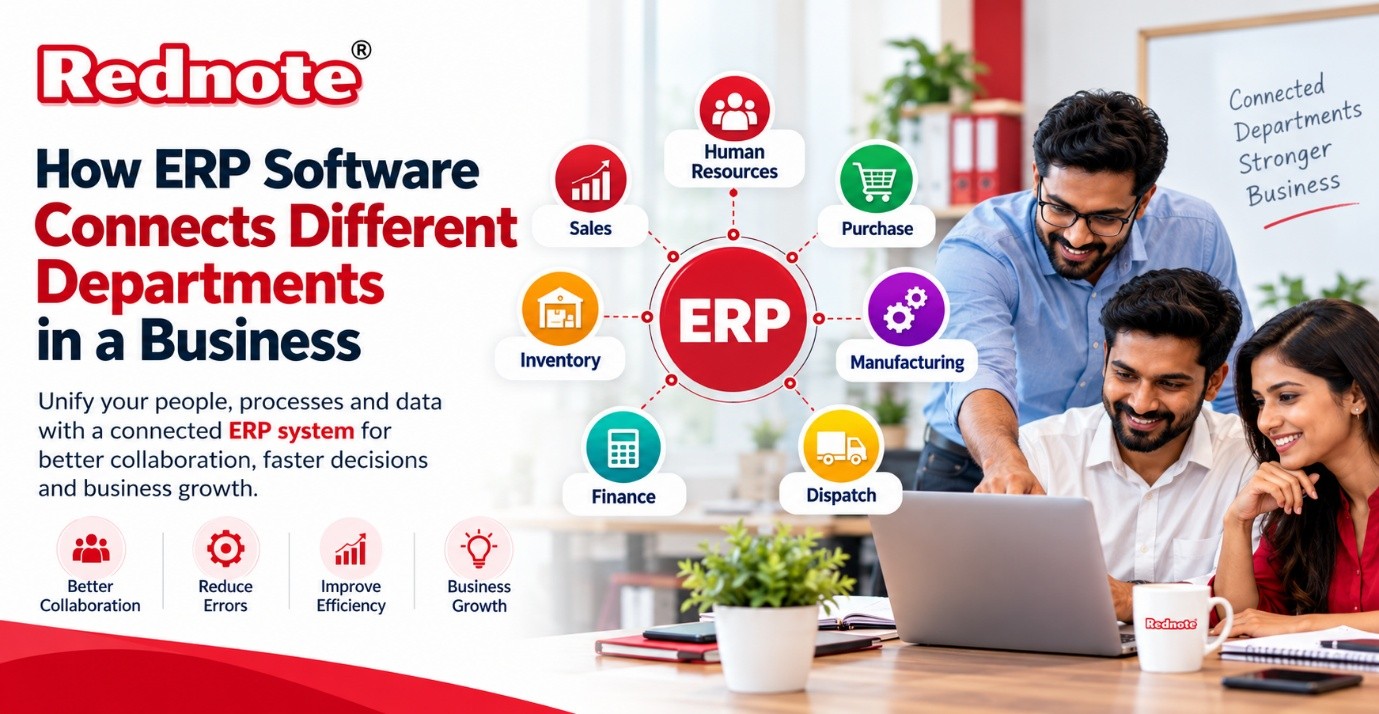
How ERP Software Connects Different Departments in a Business
In today's ultra-competitive corporate landscape, businesses of all sizes constantly look for ways to optimize their workflows, reduce operational bottlenecks, and accelerate growth. However, one of the most persistent hurdles organizations face is the presence of isolated departments working in functional silos. When the sales team operates on one application, the finance department relies on legacy desktop accounting tools, human resources uses a separate database, and the warehouse tracks stock via paper logs or basic spreadsheets, miscommunication becomes inevitable. Delays pile up, customer queries take too long to resolve, and leadership lacks a unified, real-time view of company performance. Adopting robust ERP software fundamentally transforms how an organization functions by acting as a single, centralized digital backbone that bridges these gaps and streamlines daily workflows from top to bottom.
Understanding the Hidden Cost of Departmental Silos
For many growing organizations, individual departments naturally develop their own internal workflows and toolsets over time. While this decentralized approach might feel functional during the early stages of a company’s lifecycle, it creates invisible walls as the business expands.
Consider a typical customer journey in a siloed company. A customer calls to inquire about the status of a bulk order. The support agent answers the phone, but because customer service software is not connected to the order management system, the agent has to place the customer on hold. The agent then emails the warehouse supervisor to check if the goods have been packed. The warehouse supervisor realizes the items are still sitting on the production floor, so they call the production manager. By the time the agent gets back to the customer with an update, ten minutes have passed, and the customer is frustrated.
Beyond poor customer experience, data fragmentation leads to severe internal friction. Sales teams might close deals for products that the warehouse is actually out of stock on because inventory numbers haven't updated in real time. Finance teams spend hours manually cross-checking invoices against purchase orders because procurement data doesn't sync with accounting ledgers. Without a centralized platform, managers make critical strategic decisions based on outdated, delayed, or conflicting reports.
What is an Integrated ERP System?
An ERP system is designed to solve this exact problem by combining all core business processes, workflows, and data into a single, unified database and user interface. Instead of separate silos operating in isolation, every department shares a common source of truth.
When a salesperson enters a new order into the platform, that data instantly becomes visible and actionable across the entire company. The inventory module automatically deducts the purchased items from stock levels. The procurement module notes if raw material thresholds are approaching reorder points. The production planning team receives an immediate notification to schedule assembly, and the finance department updates its accounts receivable ledger without requiring manual data entry.
This seamless flow of information eliminates duplicate data entry, dramatically reduces human error, and accelerates daily operations. Whether you run a retail enterprise, a distribution network, or a complex industrial plant, unifying your operations ensures that every single employee works from the exact same page.
Bridging Key Business Functions and Workflows
1. Sales, Inventory, and Fulfillment Synchronization
In a disconnected setup, sales teams often sell blindly without knowing real-time inventory limits. With an integrated enterprise platform, the moment a sales representative closes a deal, inventory levels update dynamically across all channels. If stock drops below a predefined safety threshold, automated alerts notify procurement teams to reorder raw materials long before stockouts can stall customer fulfillment. This real-time visibility ensures that customer promises match operational realities.
2. Finance and Procurement Integration
Financial reconciliation is notoriously time-consuming when purchasing data lives separately from accounting records. When procurement teams create purchase orders inside a centralized platform, those entries flow directly into financial ledgers. Accounts payable can instantly verify vendor invoices against received goods and purchase orders with a single click. This three-way matching ensures accurate billing, prevents duplicate payments, and strengthens vendor relationships through timely settlements.
3. Human Resources and Operations Alignment
Labor tracking is another critical area where integration matters. Employee hours tracked on shop floor terminals, project management systems, or attendance software sync directly with payroll modules. This eliminates manual timesheet transcription errors, simplifies compliance reporting, and ensures timely, accurate salary disbursement for all workers.
4. Customer Relationship Management (CRM) and Post-Sale Support
When customer service agents have immediate access to order history, shipping tracking, billing status, and previous support tickets within the same platform, issue resolution times plummet. Customers no longer need to repeat their stories to multiple departments because every interaction is logged transparently in a unified customer profile.
Tailored Solutions for Specialized Industries
Different industries possess distinct operational challenges and compliance requirements. While a retail enterprise focuses heavily on rapid inventory turnover and point-of-sale integration, industrial producers and heavy fabricators require advanced operational controls. A dedicated manufacturing ERP software solution handles intricate shop floor controls, Bill of Materials (BOM) management, multi-level work order tracking, machine utilization monitoring, and shop floor scheduling.
For businesses operating across the Indian subcontinent, finding a localized technological partner is equally crucial. Choosing reliable ERP software India providers ensures built-in compliance with regional tax regulations, GST invoicing frameworks, electronic waybills, and local currency standards. Platforms developed with deep domestic market expertise address the specific compliance, regulatory, and scaling needs of local enterprises far better than generic, one-size-fits-all global imports.
Selecting the Right Platform for Your Enterprise
With numerous options available in the global and regional market, business leaders often search for the best ERP software that aligns with their operational scope, budget, and long-term growth targets. Evaluating prospective platforms requires careful consideration of several core pillars:
- Cloud Accessibility: Modern businesses demand flexibility. Cloud-based platforms allow remote teams, warehouse supervisors, and traveling sales executives to access secure data anytime from any device.
- User-Friendly Interface: Even the most powerful platform will fail if employees find it too difficult to learn. Intuitive navigation and role-based dashboards ensure high user adoption rates across all departments.
- Scalability and Customization: As your business grows, your software must grow with you. Look for modular architectures that allow you to add advanced features—such as business intelligence, advanced analytics, or supply chain portals—as your needs evolve.
- Robust Security and Data Integrity: Centralizing your company data makes security paramount. Ensure the platform offers role-based access controls, encrypted databases, and regular automated backups.
At Rednote, businesses find scalable technology tailored to unify daily operations, streamline manufacturing workflows, and simplify financial management. By adopting a specialized ERP software for manufacturing company environments, leaders can gain deep, data-driven insights into production cycles, labor efficiency, and raw material costs.
Overcoming Implementation Challenges
While the long-term benefits of adopting a centralized enterprise platform are undeniable, the implementation journey requires careful planning and change management. Many projects encounter resistance from employees who are comfortable with legacy workflows or familiar spreadsheets.
To ensure a smooth transition, organizations should follow a structured deployment strategy:
- Define Clear Objectives: Identify current operational bottlenecks and establish measurable goals for what the new platform needs to achieve.
- Involve Departmental Stakeholders: Engage key leaders from finance, sales, warehouse, and production early in the vendor selection and workflow mapping process.
- Invest in Comprehensive Training: Provide thorough, role-specific training sessions well before the system goes live to build staff confidence.
- Phased Rollout: Consider rolling out modules gradually—such as starting with finance and inventory before expanding to advanced shop floor scheduling—to minimize operational disruption.
Conclusion
Unifying a growing enterprise requires more than just better communication—it demands a systemic shift toward integrated, transparent operations. By breaking down departmental barriers and centralizing data streams into a single source of truth, modern enterprise solutions empower teams to work collaboratively, make faster decisions, and eliminate costly redundancies. Whether you explore solutions via Rednote or evaluate broader market alternatives, investing in a unified technological foundation is the ultimate catalyst for sustainable business growth, operational resilience, and long-term success.